
Guide · 6 October 2026 · 5 min read
What is sludge dewatering?
By the Accot technical team
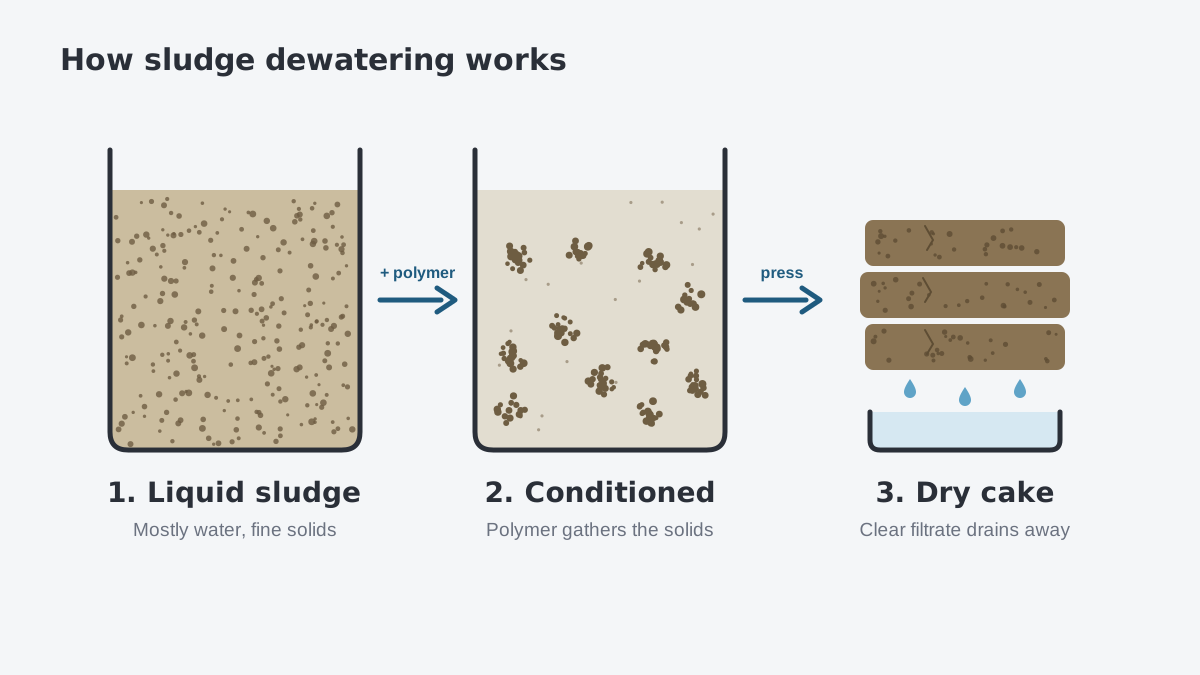
Every wastewater plant makes sludge, and most of that sludge is water. Paying to store, truck and dispose of water is expensive, so plants squeeze out as much as they can. This guide explains how sludge dewatering works, the main machines, and why the right polymer makes the difference.
What is sludge dewatering?
Dewatering removes water from liquid sludge and leaves a solid material called cake. Depending on the sludge and the machine, cake ranges from the consistency of custard (12 to 15% solids) to moist soil (20 to 40% solids).[2]
It often happens in two steps. Thickening takes out the first of the water: taking sludge from 3% to 6% solids halves its volume. Dewatering then removes much more, producing the cake.[3] Dewatering:
- reduces the volume, saving money on storage and transport
- removes free liquid before the sludge goes to landfill
- cuts the fuel needed if the sludge is incinerated or dried.[1]
How is sludge dewatered?
These are the three most common dewatering machines:
| Machine | Strengths | Drawbacks |
|---|---|---|
| Filter pressSludge is pumped into cloth-lined chambers and squeezed under pressure | The driest cake and highest solids capture of any machine. More common in industry than in municipal plants. Needs little attention during each one- to three-hour cycle.[2] | Runs in batches. Mechanically complex, with a high capital cost and a large footprint. Cloth cleaning and cake removal can take work, and operators are exposed to odours when the cake drops.[2] |
| Belt filter pressSludge is squeezed between two belts running over rollers | Low staffing and simple maintenance. Starts and stops quickly, and is quieter than a centrifuge.[1] | Odours. Needs more attention when the feed sludge varies. Oil and grease can blind the belts, and washing the belts uses a lot of water.[1] |
| CentrifugeA fast-spinning bowl separates the solids from the liquid | Small footprint, little attention once running steadily, and low operator exposure to odours. Easy to clean, and can outperform a conventional belt press.[3] | High power use and fairly noisy. Can take up to an hour to start up and shut down, and spare parts are expensive.[3] |
For a small plant, a dewatering machine may not pay for itself: hauling liquid sludge to another facility, or using drying beds, can cost less. The choice should come from a plan for that site’s sludge.[1][3]
Why conditioning matters
Sludge rarely dewaters well on its own. It’s first conditioned with chemicals that gather the fine solids into flocs, so the water can escape. Belt presses have a polymer conditioning zone built in, and the sludge must be conditioned with polymer for the press to perform at its best.[1] On a centrifuge, a poorly designed polymer system means high polymer costs and a less efficient machine.[3]
Filter presses traditionally used lime and ferric chloride. These give a dry cake, but they add weight of their own, making up 15 to 40% of the cake solids. Polymer leaves fewer added solids in the cake, so more sludge can be processed in each cycle.[2]
What to watch out for
| Watch for | Why it matters |
|---|---|
| Rough mixing | Turbulent mixing shears the floc and makes the polymer less effective. The polymer should be blended in gently, and fed with pumps that don’t break up the floc.[1][3] |
| Polymer make-up | Polymer needs proper dilution and time to age before use; undersized make-up systems waste polymer.[1][3] |
| Changing sludge | When the feed sludge varies in solids or organic content, the press needs more attention to keep performing.[1] |
| Oil and grease | Oily sludge can blind the belts and gives a wetter cake.[1] |
| Odour | Oxidising agents such as potassium permanganate, added before dewatering, reduce odours from sulphides, cut the amount of polymer needed and give a drier cake.[1] See What is an oxidiser? |
Choosing a dewatering polymer
The choice of conditioning chemical affects how well the sludge dewaters and how much it smells later.[1] Every sludge is different, so bench tests on a representative sample come first.[2] We choose the polymer grade and dose by testing on your own sludge.
Our dewatering polymers
Cationic · powder or emulsion
ACCOT Cationic Polymer
Very high molecular weight polyacrylamide for thickening and dewatering municipal and industrial sludge on belt presses, screw presses, centrifuges and filter presses.
Non-ionic · emulsion
ACCOT Non-ionic Polymer
For industrial sludge dewatering and for thickening and dewatering mineral concentrates and waste suspensions. Works particularly well in oily or fatty sludge.
Related guides
- What is a flocculant? explains how polymers build flocs.
- What is a coagulant? covers the step that produces much of the sludge.
References
- [1]United States Environmental Protection Agency (2000). Biosolids Technology Fact Sheet: Belt Filter Press (EPA 832-F-00-057). www.epa.gov/sites/default/files/2018-11/documents/belt-filter-press-factsheet.pdf
- [2]United States Environmental Protection Agency (2000). Biosolids Technology Fact Sheet: Recessed-Plate Filter Press (EPA 832-F-00-058). www.epa.gov/sites/default/files/2018-11/documents/recessed-plate-filter-press-factsheet.pdf
- [3]United States Environmental Protection Agency (2000). Biosolids Technology Fact Sheet: Centrifuge Thickening and Dewatering (EPA 832-F-00-053). www.epa.gov/sites/default/files/2018-11/documents/centrifuge-thickening-dewatering-factsheet.pdf
- [4]Environmental Quality (Scheduled Wastes) Regulations 2005, P.U.(A) 294/2005, under the Environmental Quality Act 1974 — regulation 4 and First Schedule. Department of Environment Malaysia. www.doe.gov.my/wp-content/uploads/2021/08/Environmental_Quality_Scheduled_Wastes_Regulations_2005_-_P.U.A_294-2005.pdf