
Resources
Water treatment, explained
Short, plain-language guides from our technical team. Each one explains what a treatment chemical does, where it's used and how to choose the right one, with references you can check.
Find a guide by treatment stage
Wastewater flows through these stages in a typical industrial plant. Not every plant needs every stage. Tap a guide to learn more.
- 1
Pre-treatment
- 2
pH adjustment
- 3
Metal removal
- 4
Coagulation
- 5
Flocculation
- 6
Biological
- 7
Polishing
- 8
Disinfection
- 9
Sludge dewatering
All guides, newest first
6 October 2026 · 5 min read
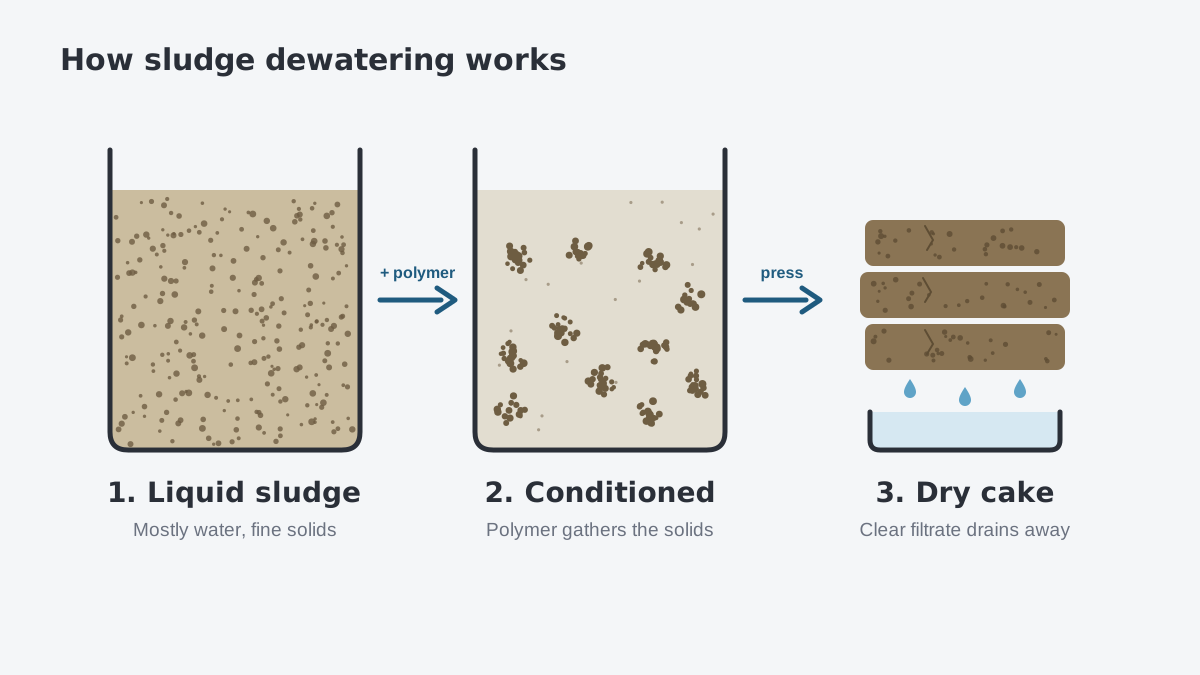
What is sludge dewatering?
How filter presses, belt presses and centrifuges turn liquid sludge into cake, why polymer conditioning matters, and what to watch for.
Read the guide →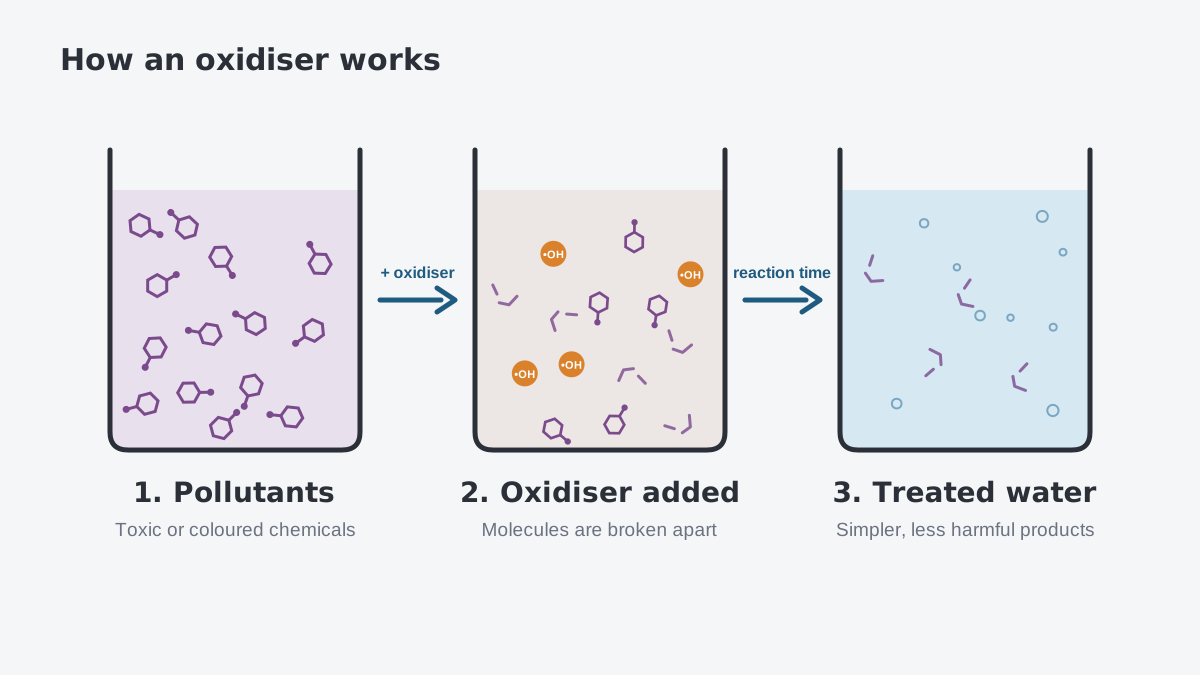
6 October 2026 · 6 min read
What is an oxidiser?
How oxidisers such as hypochlorite, hydrogen peroxide and Fenton's reagent break down cyanide, toxic organics, colour and chelating agents in wastewater.
Read the guide →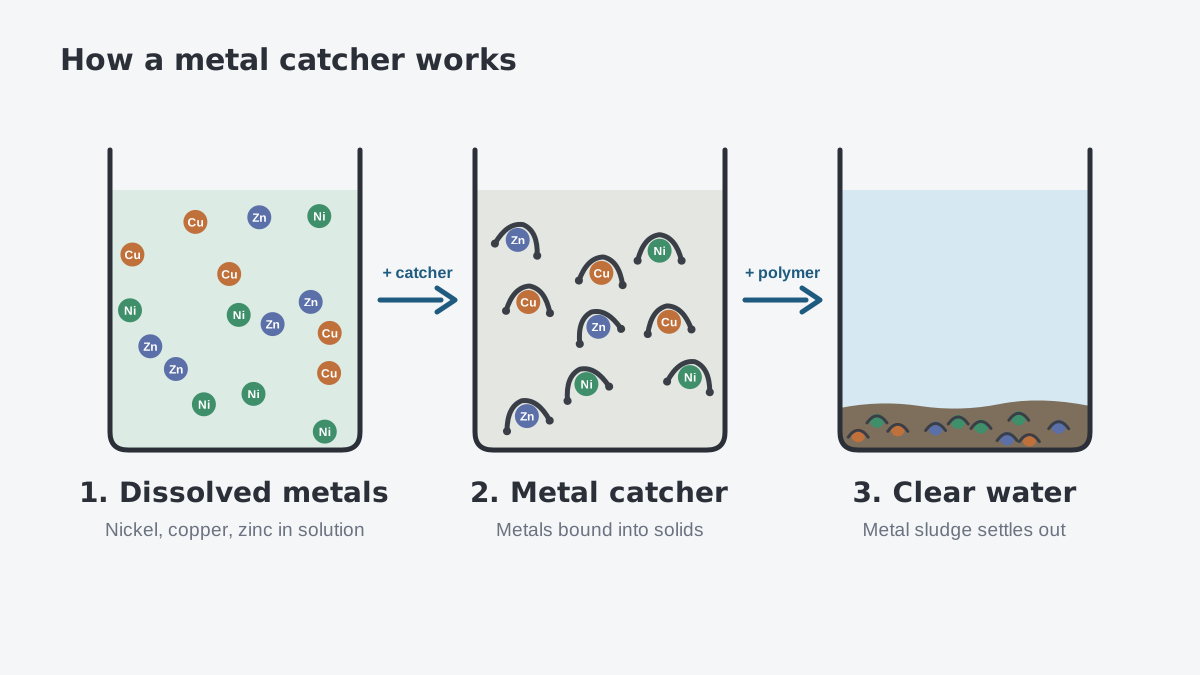
6 October 2026 · 5 min read
What is a metal catcher?
How metal catchers pull dissolved heavy metals out of wastewater, when raising the pH isn't enough, and the Malaysian discharge limits for metals.
Read the guide →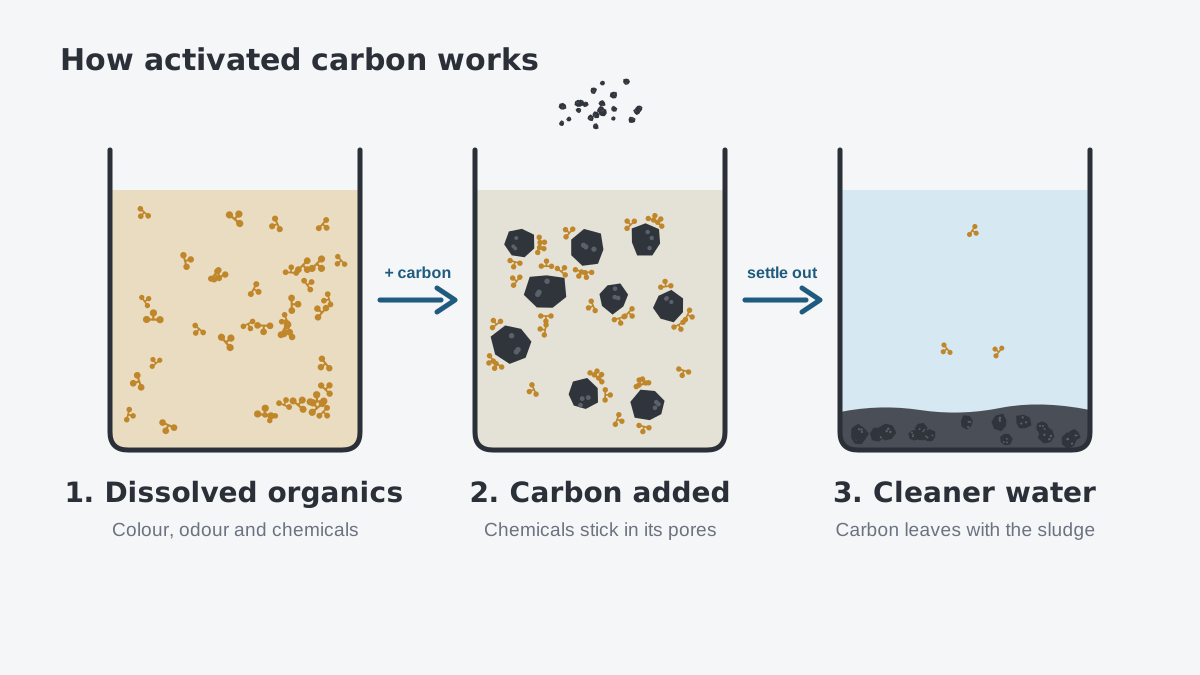
6 October 2026 · 5 min read
What is activated carbon?
What activated carbon is, how it pulls dissolved chemicals out of water, what it removes, and how to choose between powder and granules.
Read the guide →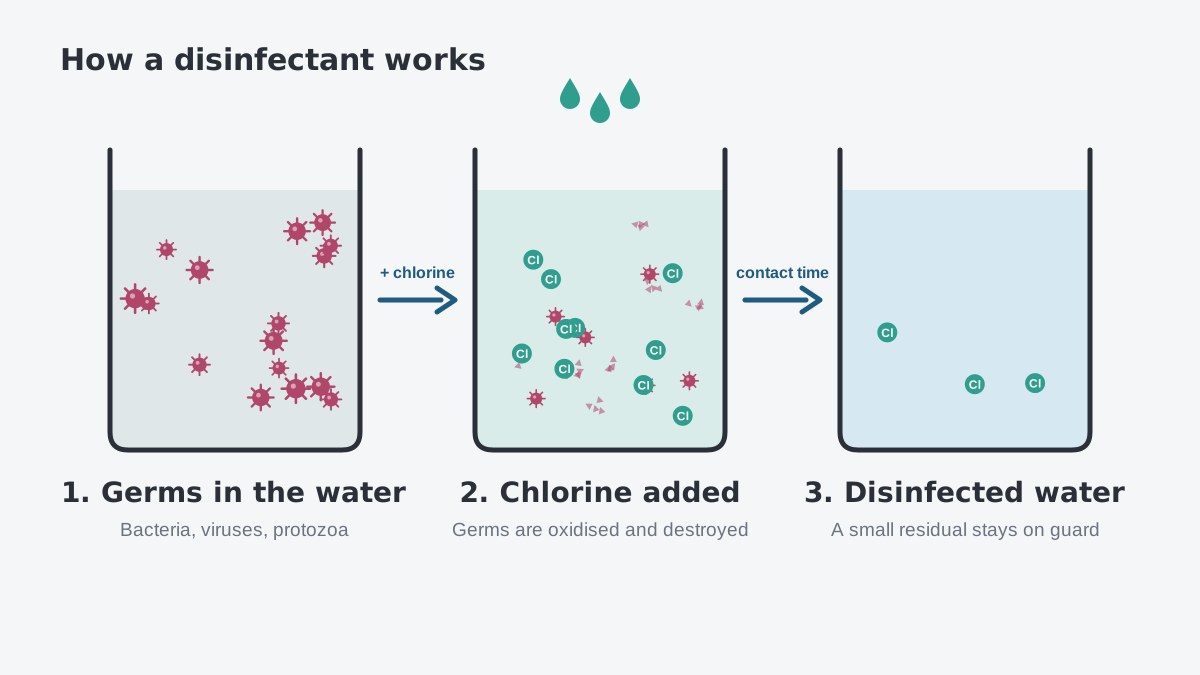
1 October 2026 · 5 min read
What is a disinfectant?
How chlorine disinfects water, where it's used, and what to watch for — from discharge limits and dirty water to by-products and tough parasites.
Read the guide →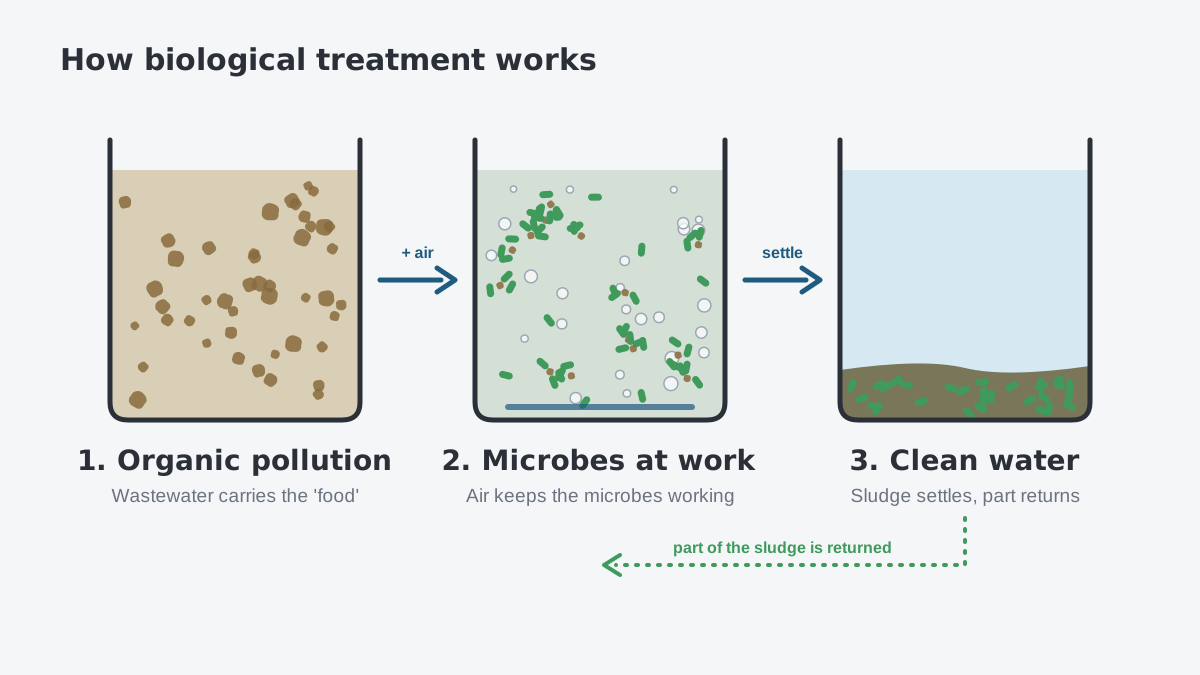
1 October 2026 · 6 min read
What is biological treatment?
How microbes clean wastewater, what they need to stay healthy — nutrients, oxygen and the right pH — and where bacteria cultures and nutrient products fit in.
Read the guide →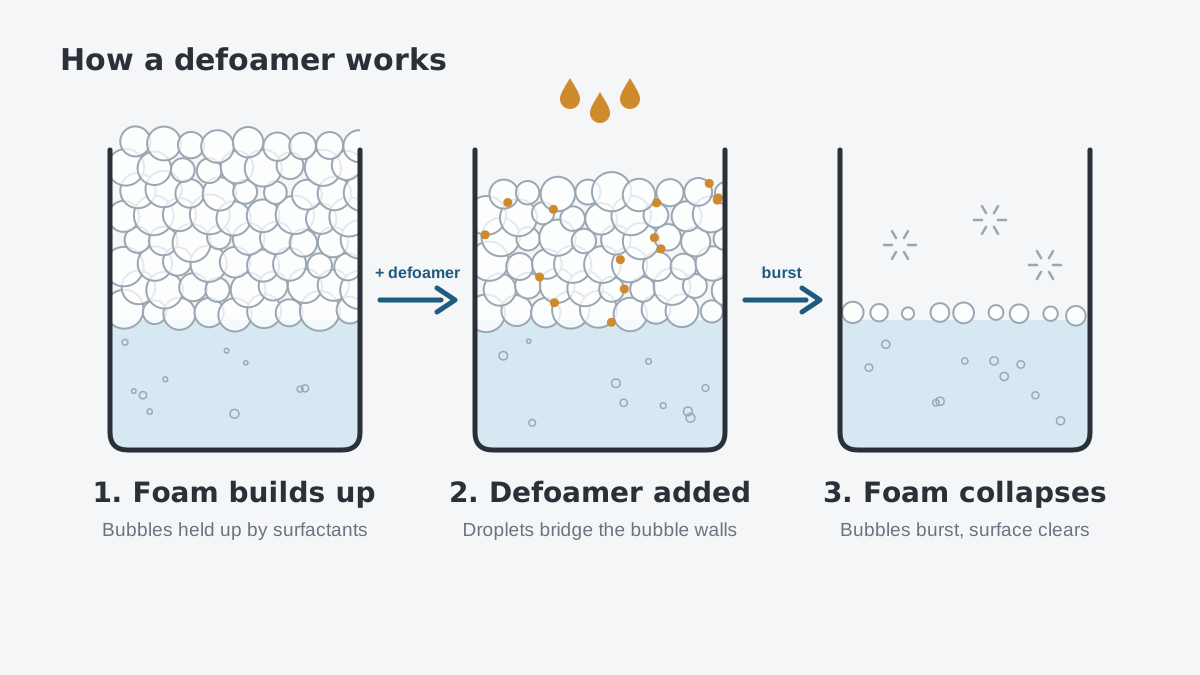
1 October 2026 · 5 min read
What is a defoamer?
How defoamers break foam, where they're used, and how to tell when foam is a sign of a deeper problem that a defoamer won't fix.
Read the guide →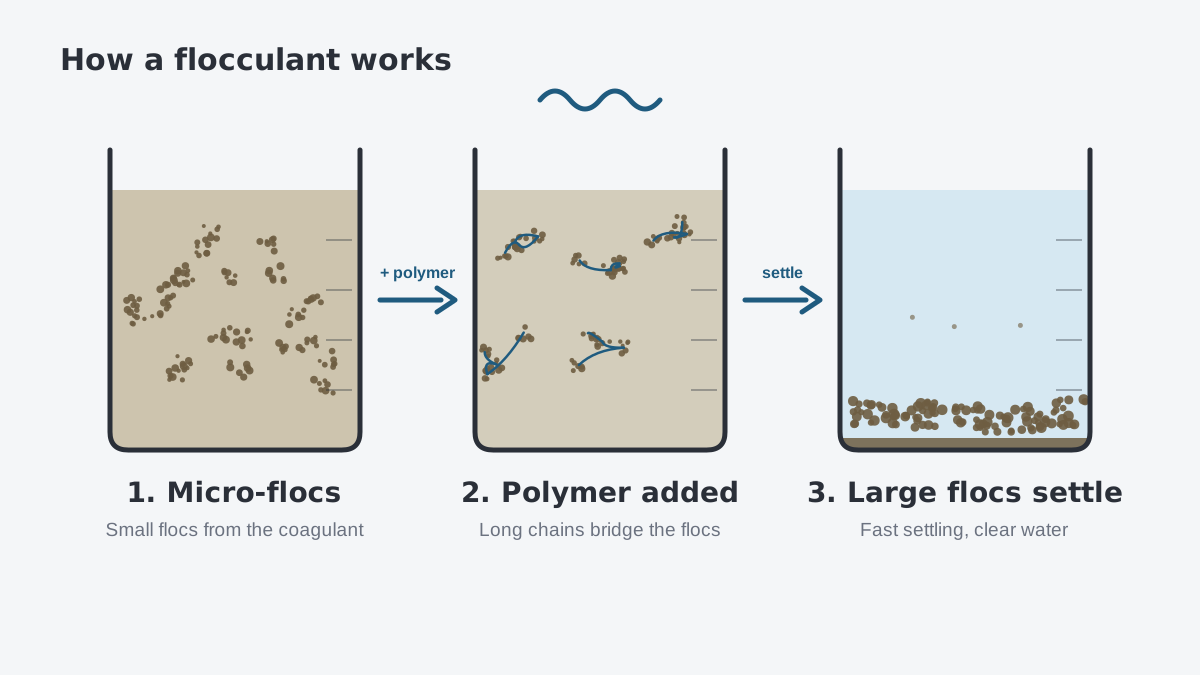
30 September 2026 · 6 min read
What is a flocculant?
How anionic, cationic and non-ionic polymers turn small flocs into large ones, where they're used, and practical tips for dosing them well.
Read the guide →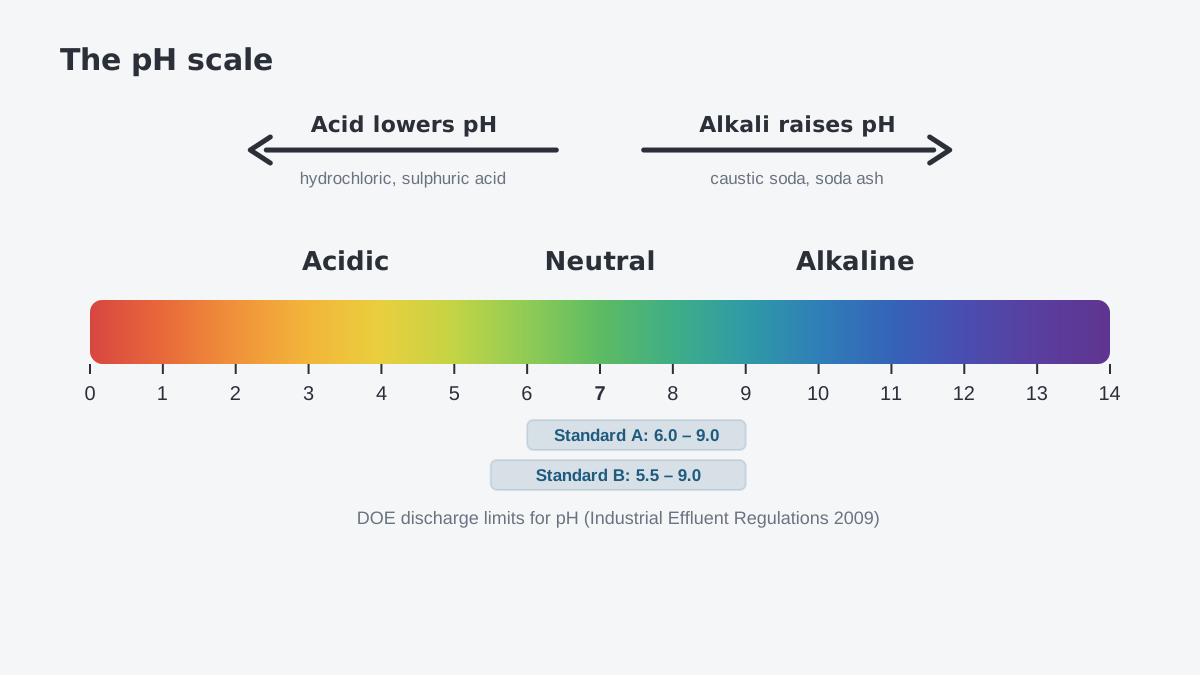
30 September 2026 · 6 min read
What is a pH adjuster?
What pH really measures, why it matters for discharge limits, coagulation and biological treatment, and how to choose between caustic soda, soda ash and acids.
Read the guide →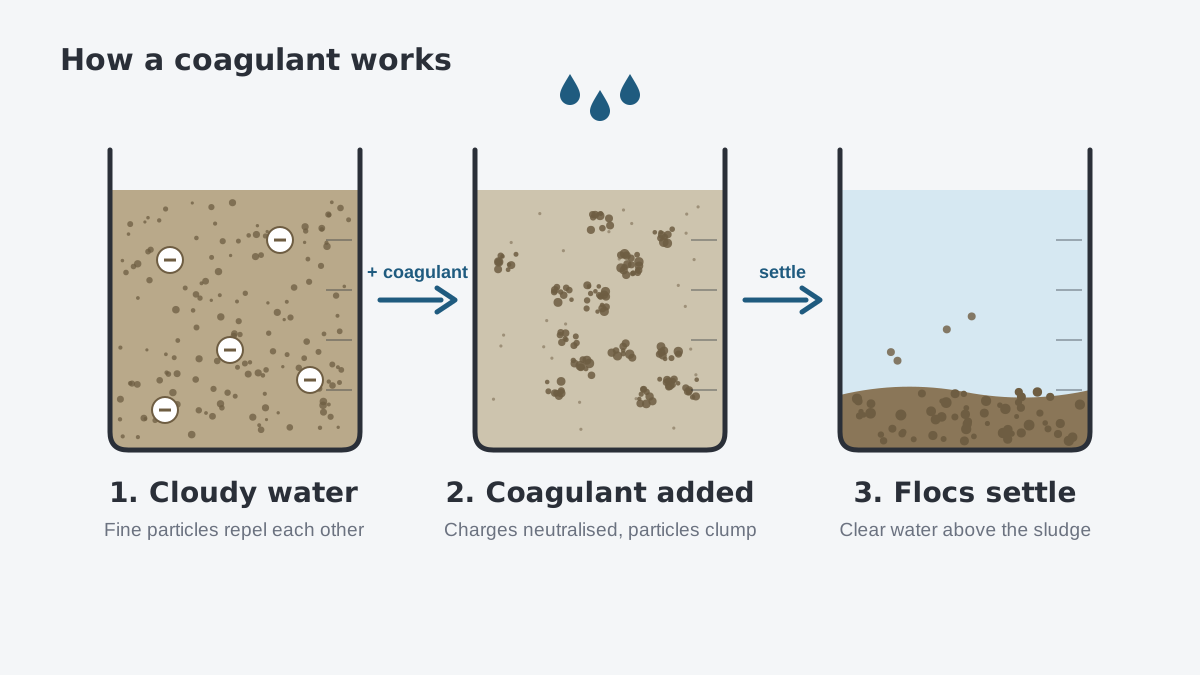
30 September 2026 · 6 min read
What is a coagulant?
Why fine particles won't settle on their own, how a coagulant fixes that, and how to choose the right one for your plant. Includes Malaysia's full Standard A and B discharge limits.
Read the guide →